.svg)


.svg)
.svg)
If you've spent any time around house hacking, you've heard the term ADU. It's the piece that makes the whole strategy work, so it's worth understanding exactly what it is before you start looking at properties.
The Basic Definition
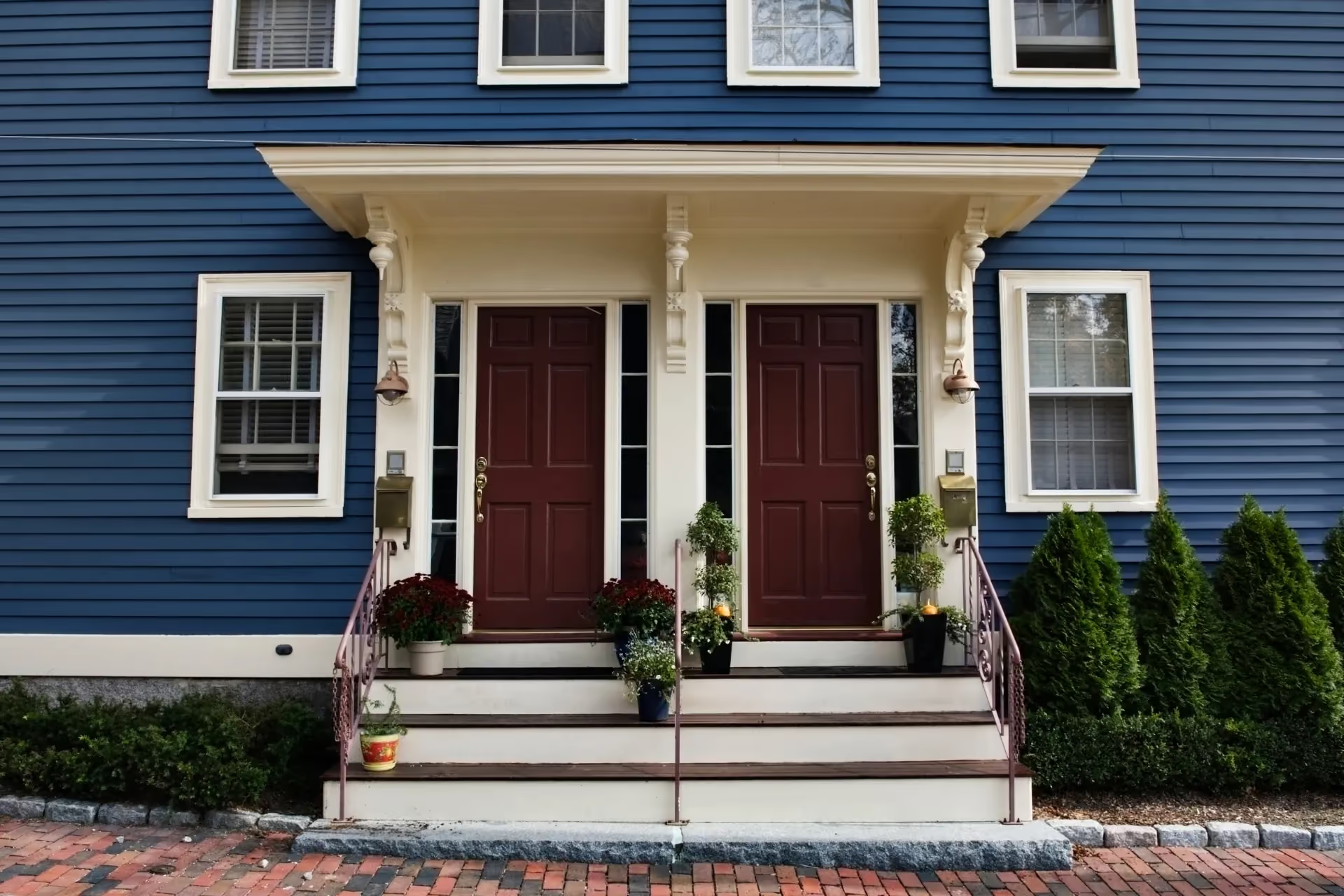
An accessory dwelling unit, or ADU, is a smaller, independent living space located on the same lot as a single-family home. It has everything needed for someone to live there on their own — a kitchen, a bathroom, and a sleeping area — separate from the main house. You'll also hear it called a basement apartment, a mother-in-law suite, a secondary suite, or a granny flat. Different names, same idea: a second home, on the same property as the first.
That independence is what makes an ADU valuable to a house hacker. It's not a spare room with a lock on the door — it's a self-contained unit you can rent out for real, ongoing income.
The Main Types of ADUs
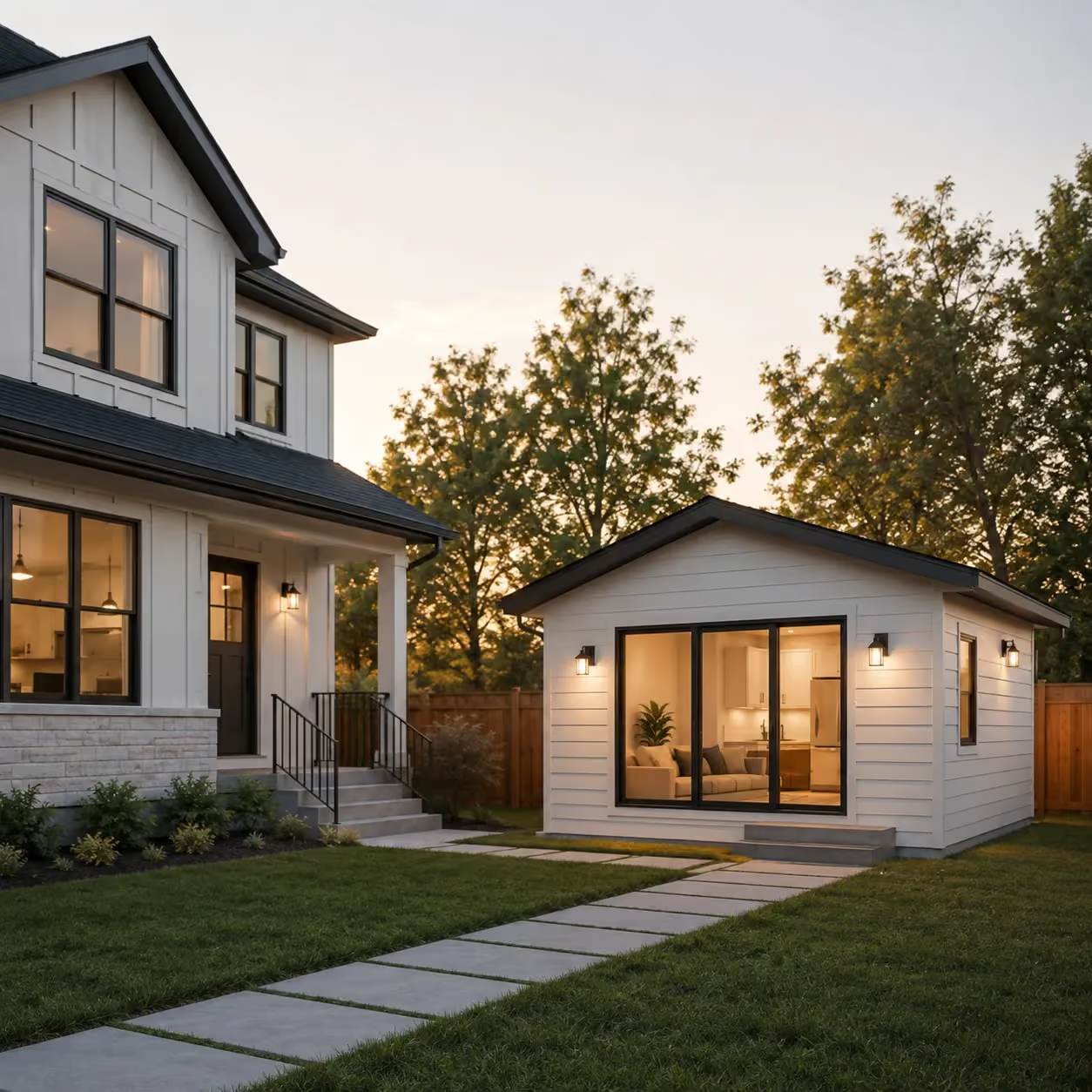
ADUs generally fall into a few categories: internal/converted ADUs, built inside the existing footprint of the home (most commonly a basement apartment, and the type we see most often in Utah house hacks); attached ADUs, a new addition to the home with its own entrance, kitchen, and bathroom; detached ADUs, a separate structure on the property like a converted garage or standalone backyard unit; and junior ADUs (JADUs), a smaller conversion, typically under 500 square feet, carved out of existing space.
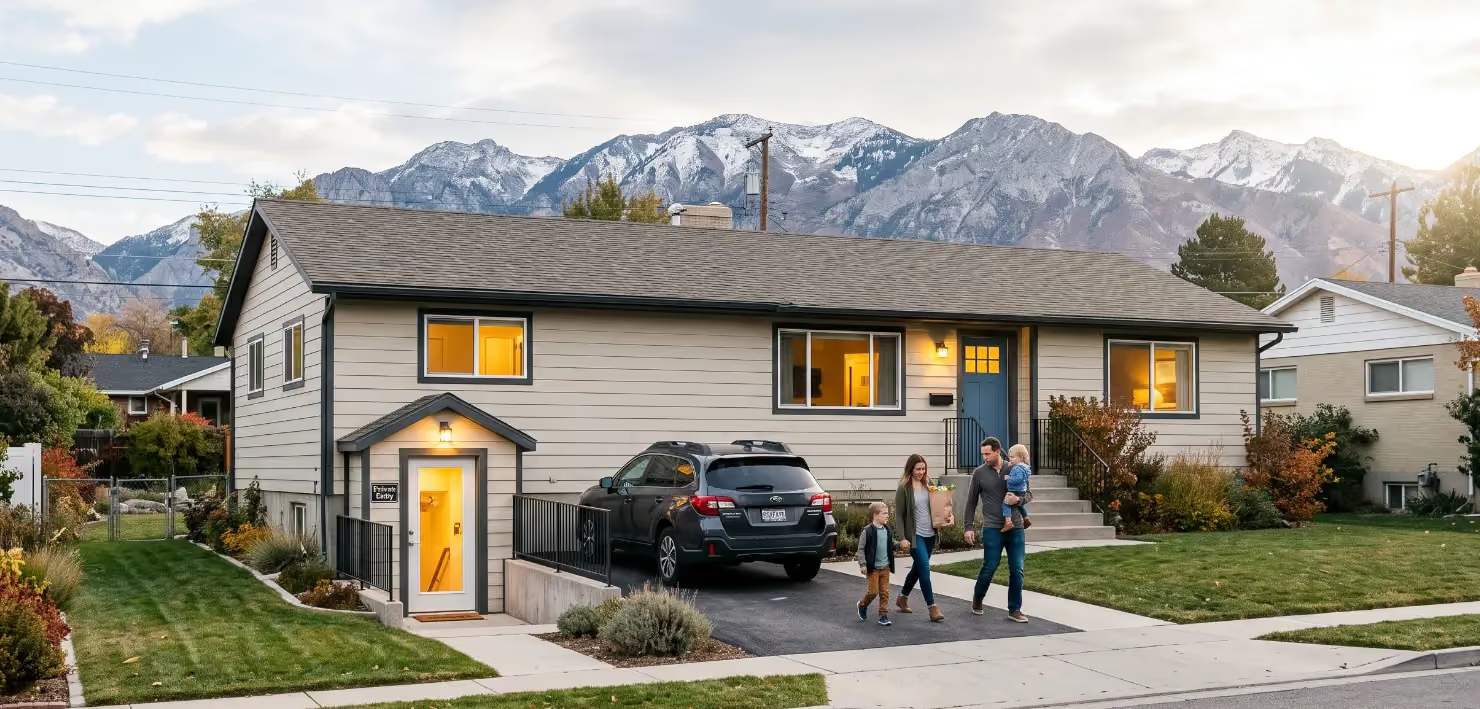
In Utah specifically, roughly 90% of the house hacks we help buyers put together are single-family homes with a basement ADU. It's the most common, most straightforward path to rental income, and it's why we treat it as the primary lead angle for buyers who want a home that pays for itself.
What Utah Law Actually Says
Utah has two separate legal tracks for ADUs, and it's worth knowing the difference.
Internal ADUs are specifically regulated by state law. An Internal Accessory Dwelling Unit (IADU) is an ADU created within the footprint of an existing, owner-occupied, single-family home for long-term rental (30 days or longer). Under Utah Code, a qualifying Internal ADU is a permitted use in any area zoned primarily for residential — meaning a city generally can't require a public hearing or discretionary approval to allow one. Cities can still place some restrictions by ordinance, such as minimum lot sizes, design requirements that preserve the home's appearance, added parking, or a rental permit — but they can't ban Internal ADUs outright across most of their residential zones.
Detached ADUs have historically been left more fully to local zoning, but that's changing. Utah recently passed a law requiring every city with a population of 5,000 or more to permit detached ADUs on qualifying lots (generally 11,000 square feet or larger with an existing single-family home), with cities required to adopt a compliant policy. Cities still control the specifics — setbacks, height limits, parking, design standards — but outright bans are no longer an option in those markets.
Bottom line: the legal path to an ADU is more open in Utah right now than it's been in years. That's good news if you're evaluating a property for house hacking potential, but it also means every lot is a little different — local ordinances, lot size, and existing structure all affect what's actually allowed.
Why This Matters When You're Buying
Not every home with a basement can legally have an ADU, and not every ADU-friendly lot has a basement worth finishing. Zoning, lot size, prior permits, and the condition of the space all factor in — which is exactly why we don't just tell buyers "look for a basement." A Homelord Property Audit™ evaluates a specific property's ADU legality, zoning, and rental income potential before you write an offer, so you know what you're actually buying instead of guessing.
If a home doesn't have an ADU yet, that's not necessarily a dead end either — a lot of our buyers purchase with future ADU potential in mind and build the income after closing.
The Takeaway
An ADU is what turns a single-family home into a home that pays for itself. Whether it's a finished basement, a detached unit in the backyard, or space with the right potential, understanding what qualifies — and what your city allows — is the first step to making the numbers work.
If you want to know whether a specific property has real ADU potential, let's talk.
.svg)