.svg)


.svg)
.svg)
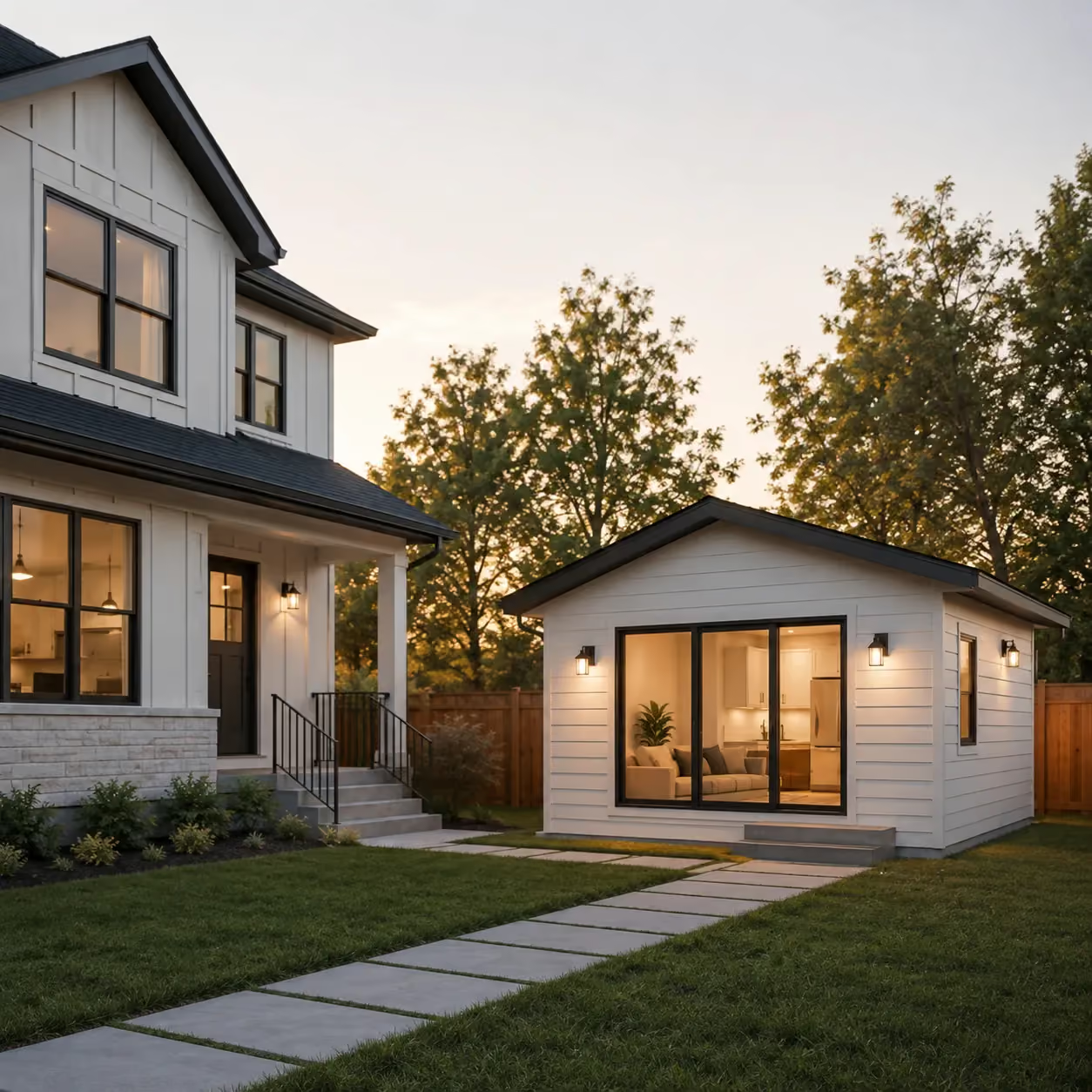
If you're house hacking, the first instinct is usually to search Zillow, Redfin, or the MLS for "ADU" and see what comes up. It feels like the obvious shortcut. It's also where a lot of buyers get misled.
Zillow Doesn't Really Have an ADU Filter
Most buyers assume Zillow has a checkbox for "has an ADU," the same way it has one for a garage or a pool. It doesn't. There's no dedicated, verified ADU filter on Zillow today.
What you get instead is a keyword search, and keyword search is messy. Type "ADU" into Zillow and you'll get a mix of homes that already have a finished basement apartment, homes with "room to add an ADU" in the description, and homes that mention ADUs for completely unrelated reasons. You're not filtering for a feature — you're filtering for a word, and the word shows up in listings that have nothing to do with an existing, rentable unit.
Some buyers try workarounds — searching "guest house," "in-law suite," or "accessory dwelling unit" instead — and other platforms like Homes.com or Redfin have added their own feature tags for in-law suites or guest houses. Those help narrow things down, but none of them verify anything. They're all just reflecting what the listing agent typed into a description or checked on a form.
The MLS Has an ADU Field — But It's Self-Reported
The MLS is a step better. Many MLS systems, including the ones used across Utah, have an actual "ADU Y/N" field agents can search and filter on. That's more reliable than a keyword search because it's a structured data field rather than free text.
But here's the catch: that field is filled in by the listing agent, based on whatever they were told or observed. Nobody is checking the city's permit records before that box gets checked. A listing agent marking "ADU: Yes" is telling you a space exists that functions like a second unit — not that the city has approved it as one, and not that renting it to a tenant is legal.
Having an ADU and Being Allowed to Rent It Are Different Things
This is the part that catches buyers off guard. A finished basement with a kitchen and a separate entrance looks like a legal ADU. Whether it actually is one depends on permits, zoning, and code compliance — none of which show up in a Zillow listing or an MLS checkbox.
In Utah, a qualifying Internal ADU is a permitted use in most residential zones under state law, but that protection only applies when the unit meets specific conditions: it has to be inside the footprint of an owner-occupied, single-family home, it has to comply with building, health, and fire codes, and depending on the city, it may need to meet lot size or design requirements. A basement apartment that was finished without permits, or added after the primary structure in a way that doesn't qualify, doesn't get that same protection — even if it looks identical from the listing photos.
Utah courts have already dealt with this exact issue. In one case, a homeowner tried to claim the right to keep renting a basement apartment as a legal nonconforming use, and lost, because they couldn't show the unit had ever been legally established as a multi-family dwelling in the first place. The apartment existed. The income didn't hold up.
That's the risk: you close on a home believing the basement apartment is worth $1,200 a month in rental income, and find out afterward that renting it to a tenant would mean operating outside city code — with real consequences if it gets reported or discovered during a future sale.
How We Actually Verify an ADU Before You Buy
This is exactly why we don't rely on a listing description or an MLS checkbox to tell a buyer what they're getting. A Homelord Property Audit™ looks at the property itself — permit history, zoning, whether the unit qualifies under state and local ADU rules, and what it would take to legally rent it if it doesn't qualify yet. You find out what you're actually buying before you write an offer, not after you've already counted on the income.
If you're searching listings and keep running into homes that say they have an ADU, don't take the label at face value. Let's verify it together.
.svg)